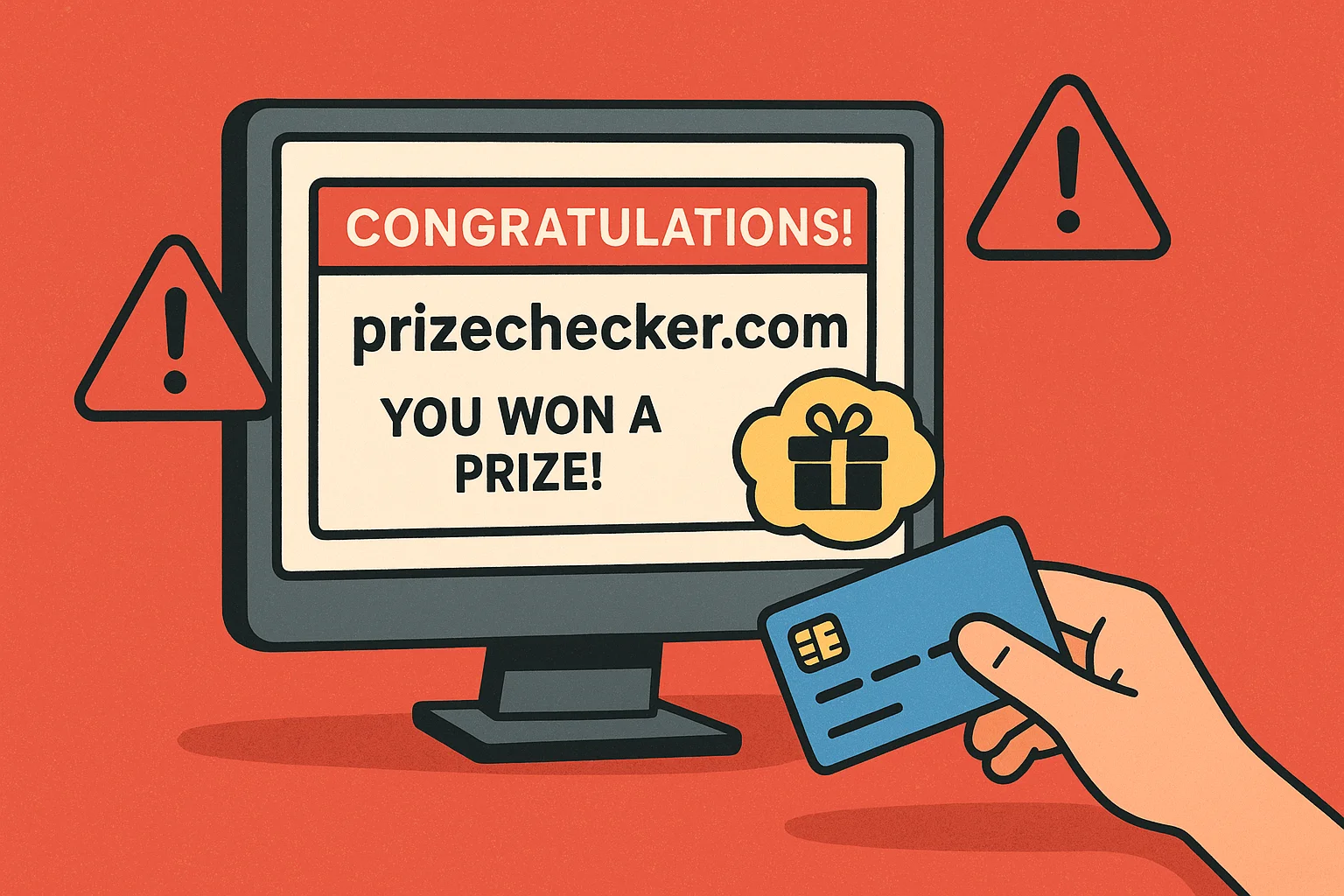
Have you ever received an online message claiming you’ve won a free iPhone or a $500 gift card? It feels exciting at first, but websites like prizechecker.com are designed to trick people into signing up for expensive subscriptions. These scams can cost hundreds of dollars and expose your personal information.
This article will explain how the prizechecker.com scam works, the warning signs to watch for, steps to protect yourself, and what to do if you’ve already fallen victim. By the end, you’ll know how to stay safe online and avoid similar subscription scams.
What Is Prizechecker.com?
Prizechecker.com is not a legitimate prize site. Scammers use it as a front to steal your personal and financial information. It claims to offer free prizes like iPhones, gift cards, or tablets. To claim your prize, you are asked to pay a small shipping fee.
What seems like a harmless $9.90 shipping charge is often just the beginning. Once your payment details are entered, scammers can sign you up for recurring subscriptions without your consent. The promised prizes never arrive.
How the Prizechecker.com Scam Works
Understanding how prizechecker.com tricks users is the first step in avoiding it. Here’s a step-by-step breakdown:
Step 1: Enticing Ads and Clickbait
Scammers use social media ads, emails, or pop-ups to lure victims. Common tactics include:
- Social Media Ads: “You’ve won a free iPhone! Click to claim your prize!”
- Emails: Fake notifications claiming urgent action is required.
- Popup Ads: Messages while browsing online, often promising gift cards.
These ads often use brand names like Apple, Amazon, or Walmart to appear legitimate. If it sounds too good to be true, it probably is.
Step 2: The Fake Website
When you click the ad, you are redirected to prizechecker.com. The site looks professional and uses official-looking logos, security badges, and fake testimonials. This makes the scam convincing, even for experienced internet users.
The website often includes:
- Professional design and graphics
- Testimonials from “winners”
- Security seals or badges
All of these elements are meant to gain your trust and make you think the prize is real.
Step 3: The Survey Trap
To claim your prize, prizechecker.com asks you to complete a short survey. Questions may seem harmless, such as:
- “How often do you shop online?”
- “Which brands do you like most?”
- “Do you want special offers?”
After completing the survey, the website tells you that you’ve won a prize. It could be an iPhone, tablet, or gift card. At this point, your excitement makes you more likely to follow the next steps.
Step 4: Collecting Personal and Payment Information
Next, the website asks you to pay a “small shipping fee” to receive your prize. Here’s what they usually request:
- Full Name
- Home Address
- Email Address
- Phone Number
- Credit Card Information
Once you enter these details, scammers gain access to your personal and financial information.
Step 5: Unauthorized Subscriptions
This is the real scam. After you provide your payment information, you may notice unexpected charges on your credit card. These charges often come from third-party subscription services you didn’t sign up for.
The scam can result in recurring charges ranging from $49 to $299 per month. Unfortunately, the promised prize never arrives.
Top Warning Signs of Prizechecker.com and Similar Scams
Being able to spot red flags can prevent you from falling victim to prizechecker.com. Watch for the following:
- Too-Good-To-Be-True Offers: Free iPhones, gift cards, or tablets are almost always scams.
- Requests for Payment Upfront: Legitimate companies rarely ask for payment to receive a prize.
- Suspicious URLs: Check the website address. Scam sites often use variations of real brand names.
- Poor Grammar or Typos: Scammers often make mistakes in their content.
- Pressure Tactics: Pop-ups or emails that push you to act immediately.
If you notice any of these signs, close the website and do not provide any personal information.
How the Scam Affects Victims
The impact of prizechecker.com goes beyond financial loss:
- Financial Stress: Monthly subscription fees can accumulate quickly, sometimes totaling hundreds of dollars.
- Emotional Distress: Victims often feel embarrassed, stressed, and frustrated.
- Identity Theft Risk: Personal details may be sold on the dark web, leading to future fraud or account compromise.
Understanding these consequences reinforces why caution is essential.
Tools and Software to Protect Yourself
Protecting yourself online involves using the right tools. Here are some recommended steps:
Antivirus and Anti-Malware Software
- Install reputable antivirus programs like Malwarebytes, Norton, or Bitdefender.
- Run regular scans to detect malware or spyware that could steal your information.
Ad Blockers and Safe Browsing
- Use ad blockers such as AdGuard to stop malicious ads and pop-ups.
- Avoid clicking links from unknown emails or social media messages.
Strong Passwords and Two-Factor Authentication
- Use unique passwords for every account.
- Enable two-factor authentication (2FA) wherever possible.
Legal Options and Reporting Scams
If you’ve fallen victim to prizechecker.com, take immediate action:
- Cancel Unauthorized Subscriptions: Contact the companies charging you and request refunds.
- Report to Your Bank or Credit Card Provider: Dispute unauthorized charges and consider canceling your card.
- Monitor for Identity Theft: Check your credit reports regularly.
- Report the Scam: Notify the Federal Trade Commission (FTC) at reportfraud.ftc.gov. You can also report to your local Attorney General’s office or Better Business Bureau (BBB).
Taking these steps can limit financial damage and help prevent further fraud.
Frequently Asked Questions About Prizechecker.com
Q: Is Prizechecker.com a legitimate website?
A: No, it’s a scam designed to steal personal and financial information.
Q: What should I do if I’ve entered my payment info?
A: Contact your bank or credit card company immediately. Cancel subscriptions and monitor your accounts for unusual activity.
Q: Can the promised prize ever arrive?
A: No. Scammers never deliver prizes. The goal is to get your personal and payment details.
Q: How can I avoid scams like this in the future?
A: Be cautious of “free prize” offers, check URLs carefully, and use antivirus and ad-blocking tools.
Common Myths About Sweepstakes and Prizes
Many people believe that legitimate companies give away expensive prizes randomly. Here’s why this is false:
- Myth 1: Big prizes are always real. Fact: Free giveaways from unknown websites are usually scams.
- Myth 2: A small shipping fee makes the offer legitimate. Fact: Scammers use tiny fees to gain trust and access your payment information.
- Myth 3: Trusted brands are involved. Fact: Scammers often use logos from Apple, Amazon, and Walmart without permission.
Being aware of these myths helps you spot fraudulent websites.
Real-Life Experiences
Victims often share similar experiences:
- “I thought I won an iPhone, paid $9.90 shipping, and then saw $49 monthly charges on my card.”
- “My personal info was used to sign me up for subscriptions I never wanted. It was stressful to fix everything.”
These stories highlight the importance of vigilance when dealing with online sweepstakes.
How to Stay Safe Online: Best Practices
To avoid scams like prizechecker.com, follow these tips:
- Think Twice Before Clicking: Avoid suspicious links in emails or social media.
- Check Website Security: Ensure the URL begins with “https://” and has a lock icon.
- Use Security Software: Antivirus, anti-malware, and ad blockers protect your devices.
- Keep Software Updated: Install updates for apps and operating systems promptly.
- Be Careful with Personal Info: Only share sensitive information on verified sites.
- Trust Your Instincts: If an offer feels off, leave the website immediately.
Conclusion: Key Takeaways on Prizechecker.com
The prizechecker.com scam is designed to lure unsuspecting users into giving away personal and financial information. By understanding the tactics scammers use, you can protect yourself and your family from unwanted charges and identity theft.
Remember:
- Always be skeptical of offers that seem too good to be true.
- Never enter personal or payment information on unknown websites.
- Use antivirus, ad blockers, and safe browsing practices.
- Report scams to authorities to help prevent future victims.
Being aware, cautious, and informed is the best defense against online subscription scams. Share this knowledge with friends and family to keep everyone safe from prizechecker.com and similar scams.